

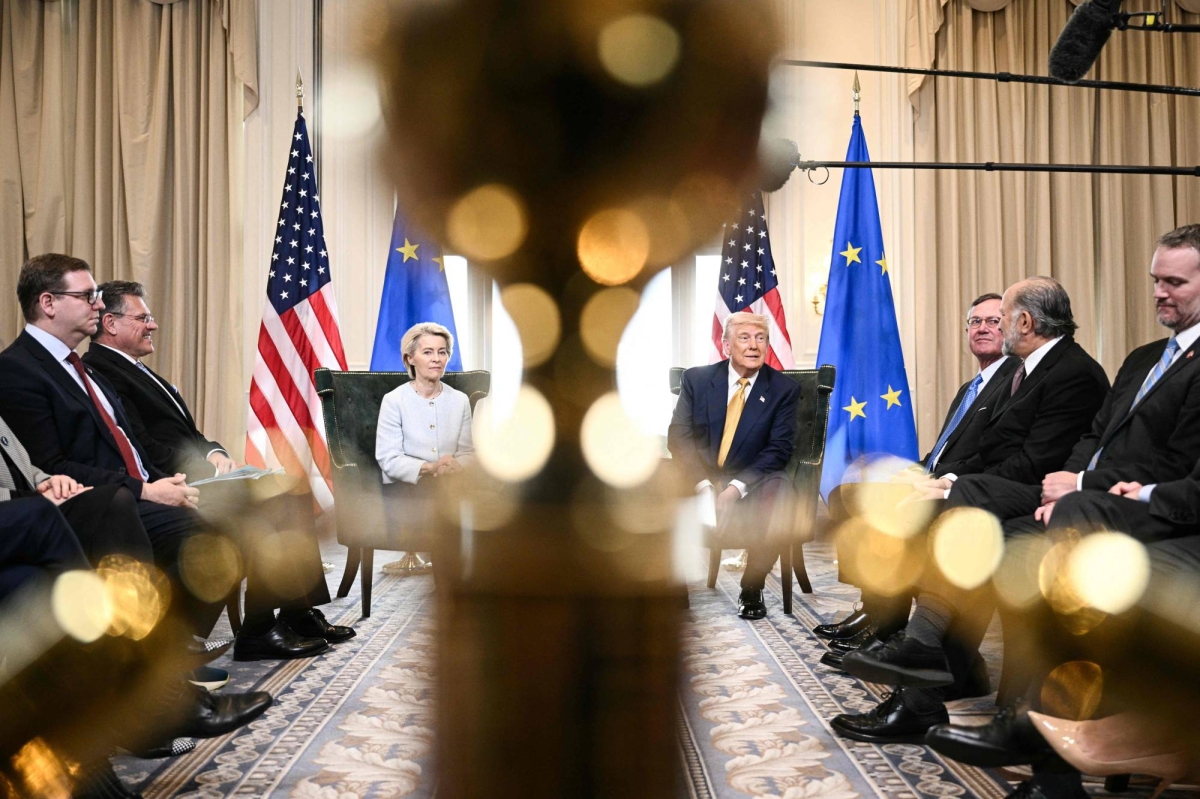
Attempts to complete a commercial treaty between the European Union and the United States are ongoing, with European delegates expressing increasing dissatisfaction with the conditions suggested by the U.S., especially within the structure established during former President Donald Trump’s tenure. Although discussions between the two parties have persisted with careful optimism, the fundamental problems that have obstructed advancement are largely unsettled.
The proposed deal was intended to ease trade tensions and eliminate specific tariffs that have affected transatlantic commerce in recent years. However, European negotiators argue that the deal, as it currently stands, disproportionately benefits the United States and fails to reflect a balanced approach that would serve both economies equitably.
Among the sticking points is the legacy of Trump-era tariffs, particularly those imposed on European steel and aluminum, which were introduced on the grounds of national security. Though some of those tariffs have since been suspended or eased, European officials maintain that the underlying logic behind them continues to influence the negotiation table in ways they find unacceptable.
Negotiators from Brussels have repeatedly signaled that while the EU remains committed to reaching a long-term agreement, they are unwilling to accept a framework that appears one-sided or lacks mutual concessions. The EU’s trade representatives have emphasized the importance of reciprocity, especially given the historical strength of transatlantic economic ties.
The talks have taken on renewed urgency as global trade dynamics shift and both economies attempt to recover from recent disruptions, including the COVID-19 pandemic and supply chain challenges. Yet despite shared interests in stabilizing trade, both sides are approaching the negotiations with differing priorities and levels of flexibility.
One of the key challenges, according to sources familiar with the discussions, lies in aligning policy goals related to industrial standards, digital trade, and subsidies. While the U.S. side has pushed for certain protections and market access provisions, European negotiators have expressed concern that some of these terms would place European businesses at a disadvantage.
There is also disagreement over agricultural trade. The United States continues to advocate for broader access to European markets for American agricultural products, but the EU remains cautious due to strict food safety standards and concerns over genetically modified crops. These issues have historically been a flashpoint in EU-US trade talks, and little progress appears to have been made in bridging the gap.
Environmental regulations represent another area of divergence. The EU has prioritized climate-friendly policies and green transition measures, while some U.S. proposals—shaped during the Trump administration and not fully reversed—do not align with European environmental standards. This has added another layer of complexity to an already challenging negotiation process.
Public opinion and political demands also impact the speed and nature of the negotiations. In various EU countries, there is increasing doubt about forming an extensive trade agreement that could undermine environmental laws, worker rights, or consumer protection measures. European representatives are highly conscious of these local issues and are careful not to seem as though they are giving up too much for quick progress.
Meanwhile, U.S. representatives argue that the current proposals offer meaningful opportunities for cooperation and economic growth on both sides of the Atlantic. They point to areas where tariffs have been rolled back and emphasize that the U.S. is open to a pragmatic agreement, even if it involves compromise.
Although these reassurances have been given, European diplomats continue to exercise caution. A number of them perceive the Trump administration’s trade policy as aggressive and one-sided, and there persists an underlying skepticism about whether the ensuing discussions are truly based on collaboration or still primarily serve American priorities over everything else.
The Biden administration has aimed to shift the atmosphere of global trade discussions and has initiated efforts to restore confidence with European partners. Nonetheless, the influence of earlier policies continues to linger over the present negotiations, resulting in gradual advancements.
Industry leaders on both continents are watching closely, urging their governments to come to a resolution that will restore certainty and eliminate lingering trade barriers. Sectors such as automotive manufacturing, agriculture, and technology stand to benefit significantly from a comprehensive and equitable trade pact, but only if the terms are mutually advantageous.
The complexity inherent in transatlantic trade discussions is evident in the unresolved nature of their negotiations. Although both sides openly declare a desire to cooperate, their contrasting ideas on what constitutes a successful agreement persistently obstruct significant progress.
Observers note that future talks will likely require a more significant shift in approach—one that fully acknowledges past grievances while focusing on shared goals, such as technological innovation, sustainable development, and economic resilience.
While a change like that hasn’t happened, the trade agreement between the EU and the US is still stalled, burdened by the history of disputed tariffs and different economic goals. It is not known if the ongoing round of talks will overcome this deadlock, but it is evident that European representatives will not approve a treaty that doesn’t ensure equity and balance for both parties across the Atlantic.
