

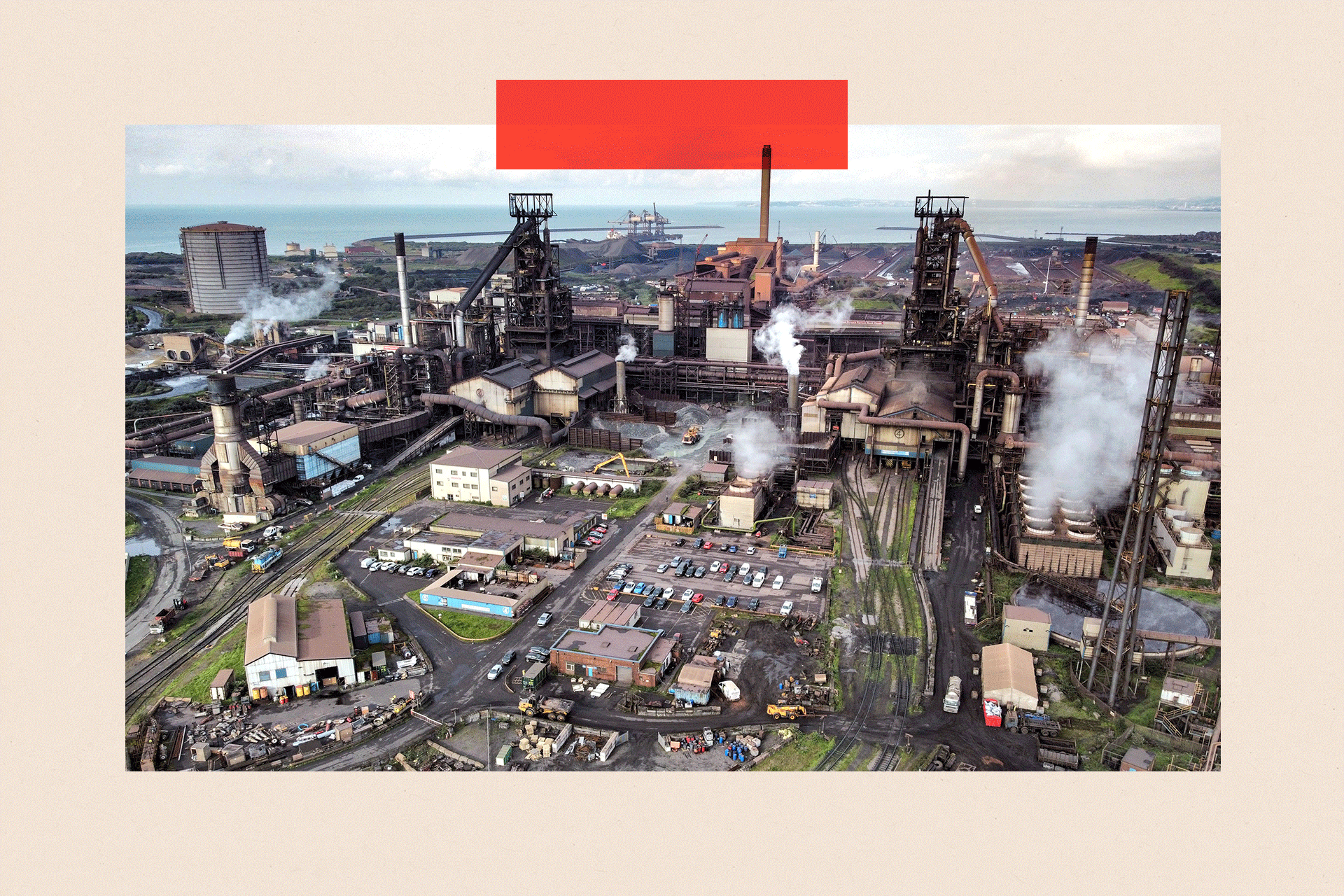
As the United States prepares for a potential shift in trade policy under former President Donald Trump’s renewed influence, the implications for the UK’s steel sector—particularly its remaining industrial towns—are drawing increasing attention. The prospect of new or reinstated tariffs on steel imports, a central component of Trump’s broader economic agenda, has sparked fresh uncertainty across Britain’s steel-producing regions, many of which are still recovering from previous economic shocks.
The concerns stem from Trump’s persistent emphasis on “America First” trade policies, which during his presidency led to the imposition of steep tariffs on imported steel and aluminum in 2018. Framed as a national security measure under Section 232 of U.S. trade law, those tariffs disrupted international steel markets and triggered retaliatory measures from key allies, including the UK and the European Union. While some of those restrictions were softened in subsequent years, Trump has signaled a willingness to revive and expand them if elected again, potentially reigniting trade tensions.
For the towns in Britain that produce steel—like Port Talbot in Wales and Scunthorpe in Lincolnshire—the impending danger holds significant importance. These areas have traditionally relied on the steel sector not just for jobs, but also for sustaining the local economy and community identity. Over the years, the industry has shrunk considerably as a result of worldwide competition, technological advancements, and evolving market needs. Nonetheless, several large-scale plants remain active, catering to the country’s construction, infrastructure, and manufacturing sectors, along with meeting international demands.
Industry leaders and union representatives are now warning that the reintroduction of U.S. tariffs could undercut British steel exports just as companies are beginning to regain their footing. While the total volume of UK steel exports to the U.S. is modest compared to larger players such as China or the EU, American buyers remain a key market for certain specialty products manufactured in the UK. A tariff barrier could make those goods less competitive and push buyers toward alternative sources, thereby tightening the pressure on already strained operations.
The broader worry is that trade barriers might accelerate the decline of an industry that has long been viewed as strategically important to the UK’s industrial base. Despite calls for greater investment in green steel technologies and domestic production capabilities, many British steelmakers continue to operate on thin margins, and additional trade friction could jeopardize future viability. Some facilities have already scaled back output or announced layoffs in response to fluctuating demand and energy costs, and renewed trade restrictions could further destabilize the sector.
For workers and residents in traditional steel towns, the debate over international trade policies is far from abstract. It directly influences job security, local business activity, and the social fabric of their communities. Many of these towns have faced decades of deindustrialization, with the loss of manufacturing jobs contributing to wider economic challenges, including reduced investment, lower incomes, and limited access to services. In this context, any policy—foreign or domestic—that threatens to erode industrial employment further is met with deep concern.
British officials have expressed caution in response to the tariff threat, emphasizing the importance of maintaining strong economic ties with the United States. As one of the UK’s largest trading partners outside the EU, the U.S. represents a critical market for a wide array of British exports. The UK government has previously negotiated exemptions and quotas to avoid the harshest impacts of earlier U.S. tariffs, and similar diplomatic efforts are likely to be pursued again if trade restrictions return.
Nonetheless, a number of experts claim that depending on spontaneous discussions cannot replace a thorough and proactive industrial approach. They propose that the UK should not merely react to outside dangers but also actively fortify its local steel sector via creativity, funding, and contemporary facilities. This involves speeding up the transition to low-carbon steel manufacturing, enhancing the robustness of supply chains, and fostering workforce training to guarantee that upcoming employment in the field is stable and enduring.
There are also calls for closer collaboration between government, industry, and local authorities to protect communities most vulnerable to economic shocks. In many cases, steel towns have the potential to become hubs of advanced manufacturing or renewable energy production, but this transformation requires targeted support and long-term planning. Without it, they risk further decline, exacerbated by global market fluctuations and unpredictable trade policies.
During this time, the political aspect of trade conflicts is significant. Trump’s talk about safeguarding U.S. jobs with tariffs tends to find support among voters in the country’s manufacturing zones, yet it may also negatively impact global allies. The UK, striving to maintain its image as a cooperative trading partner after Brexit, faces the challenge of balancing the promotion of bilateral ties and safeguarding its national economic interests.
In this context, the fate of the UK’s steel towns becomes emblematic of a broader challenge—how to preserve critical industries in an interconnected and increasingly competitive global economy. It is a challenge that requires not only reactive measures, but also a bold vision for how traditional sectors can adapt to new economic realities without leaving communities behind.
As policymakers and industry leaders monitor developments in U.S. trade policy, the voices from Britain’s steel towns are clear: their future should not be determined solely by decisions made across the Atlantic. Instead, it should be shaped by a shared commitment to industrial resilience, economic fairness, and a recognition of the vital role that manufacturing continues to play in national and local life.
The next few months could be crucial. As the possibility of protective trade measures reappears, the UK stands before a significant decision: determining the optimal way to safeguard its steel sector from external disruptions while also establishing a foundation for sustainable revitalization. For the communities whose identities have been fashioned around steel, the importance cannot be overstated. Their ongoing existence—and future success—might hinge on decisions made not just in Washington, but also in Westminster and elsewhere.