

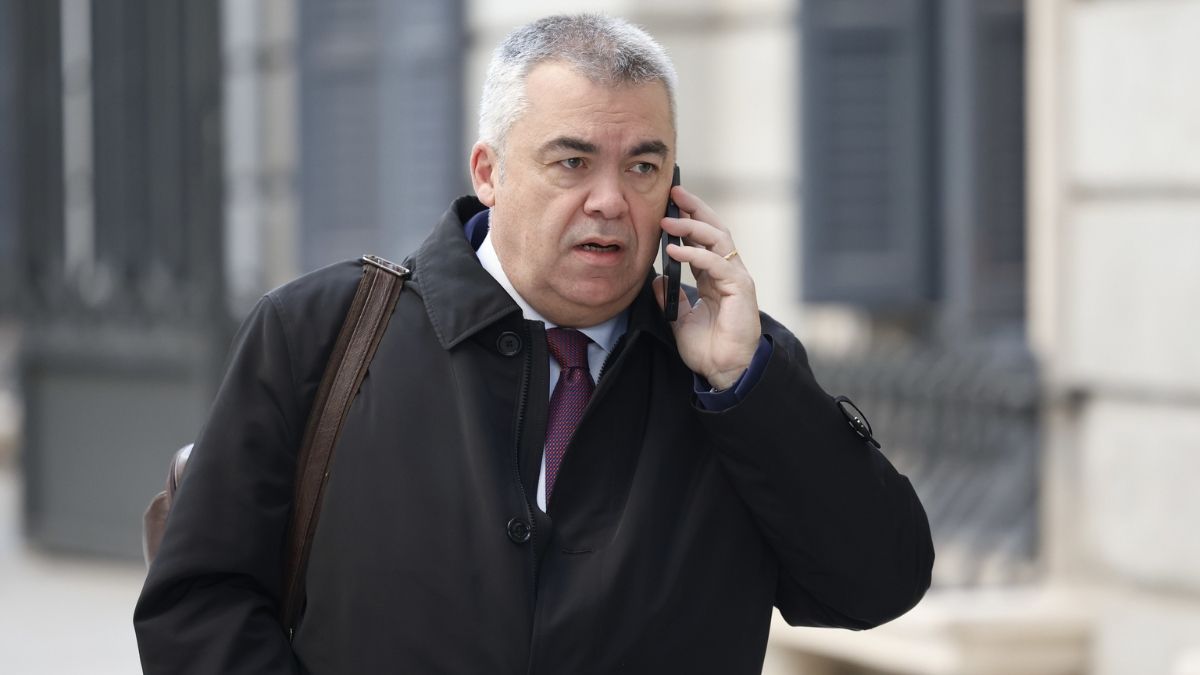
A document from Spain’s top anti-corruption agency, known as the UCO (Central Operational Unit of the Guardia Civil), has identified infrastructure behemoth Acciona as central to an extensive political graft network purportedly orchestrated by senior officials of the Socialist Party (PSOE). The authorities claim that the company disbursed large sums in unlawful commissions to obtain significant government contracts. These payments were reportedly routed through political figures closely associated with former minister José Luis Ábalos and the party’s ex-Organization Secretary, Santos Cerdán.
Over €600,000 in Illicit Payments
The UCO report outlines a series of payments amounting to a minimum of €620,000 related to certain governmental contracts granted to Acciona. These financial transactions were said to be organized via intermediaries connected to Ábalos and his close collaborator Koldo García, with the entire scheme managed and orchestrated by Santos Cerdán.
Researchers discovered proof of another €450,000 in bribes connected to three more government contracts, indicating that the suspected corruption network was not a one-time occurrence but continued, even when early indicators of irregularities started to show.
Agreements Designed to Benefit Acciona
The agreements under discussion encompass significant infrastructure endeavors from 2018 to 2021, including road construction, railway enhancements, and city transit networks, mainly in areas led by the PSOE. As per the UCO’s findings, these bids lacked genuine competition and were tailored with specific criteria that essentially barred other contenders, guaranteeing Acciona’s victory.
The report characterizes the process as part of a “perfectly coordinated structure” in which political power was used to distort the bidding process in exchange for financial kickbacks.
The Key Role of Santos Cerdán
One of the most damning elements of the UCO investigation is the role attributed to Santos Cerdán. The report alleges that Cerdán not only had knowledge of the bribery scheme but directly managed the flow and distribution of payments. Recorded communications and testimony point to him as the central political figure orchestrating the relationship between business interests and high-level political influence.
According to investigators, Cerdán handled negotiations, assigned percentages, and acted as the link between the awarding authorities and the beneficiaries of the scheme.
Organizational Quietude and Internal Evaluations
Acciona has initiated a self-assessment, openly dissociating from any illicit activities. A past executive purportedly associated with the operation has already departed from the organization. Despite Acciona asserting lack of awareness regarding any misconduct, the UCO report indicates otherwise, portraying a scenario of a company that either took part actively or ignored the unethical actions.
Even with the gravity of the accusations, the government has not issued any official comment. Within the PSOE, the issue has turned into a significant problem, particularly following recent prominent resignations caused by earlier stages of the corruption inquiry.
The UCO report leaves little doubt: Acciona was allegedly part of a broader, politically engineered system designed to extract bribes in exchange for multimillion-euro public contracts. If confirmed, this case would expose a deep corruption network rooted not only in party operatives but in the institutions responsible for managing public resources.
This issue has transcended internal party misconduct, potentially becoming a national-level scandal. The public is now watching to see if the judiciary and political institutions are determined to ensure full accountability, regardless of the investigation’s reach.
