

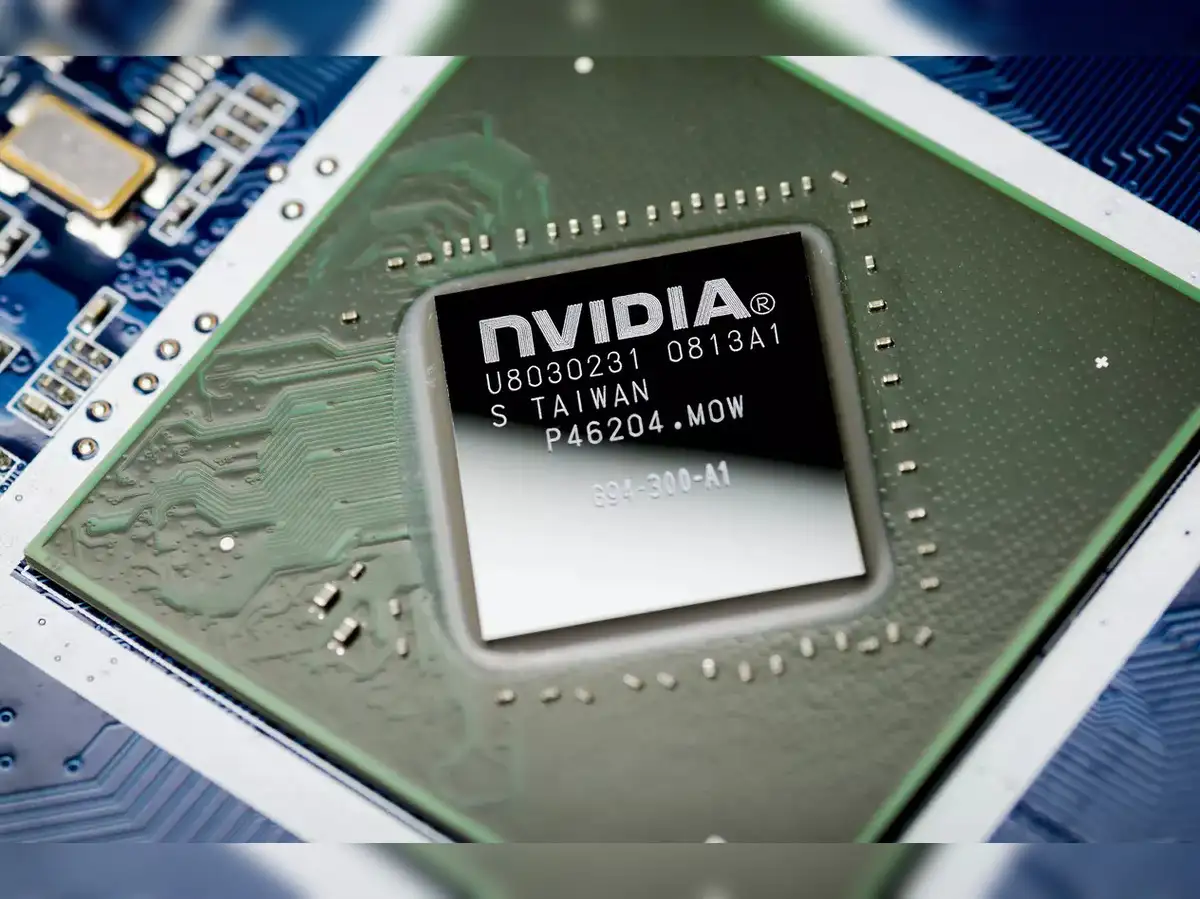
Nvidia is preparing to reintroduce its H20 artificial intelligence (AI) chip to the Chinese market after confirming that it has received the necessary assurances from the U.S. government. This move follows months of uncertainty for the tech company, which had paused shipments of certain AI chips to China in response to evolving export restrictions implemented by Washington.
The H20 chip, part of Nvidia’s Hopper architecture and specifically designed to align with U.S. trade guidelines, represents the company’s strategic response to limitations placed on high-performance semiconductors destined for China. These restrictions were part of broader efforts by the U.S. to control the flow of advanced AI technologies that could have military or strategic applications. As a result, Nvidia had to revise its chip designs and introduce versions like the H20 with reduced performance to comply with regulatory requirements.
The renewed approval now allows Nvidia to proceed with sales and shipments of the H20 chip in China, a critical market for the company’s long-term growth. China represents a significant portion of global demand for AI computing hardware, with cloud providers, research institutions, and tech firms seeking high-performance GPUs for machine learning, data analytics, and generative AI applications.
Nvidia announced that it plans to start shipping “in the near future,” indicating a careful yet determined direction for its activities in the area. The company’s representative highlighted that the recommenced sales adhere entirely to the existing export regulations, which specify the top levels of computing capability and interconnect velocity that AI chips are allowed to provide to clients in particular nations, such as China.
This announcement comes amid ongoing geopolitical tensions between the U.S. and China, particularly in areas related to technology, trade, and national security. In recent years, Washington has introduced a series of export restrictions aimed at limiting China’s access to cutting-edge semiconductor technologies. These policies have placed pressure on U.S. chipmakers like Nvidia, AMD, and Intel, requiring them to redesign or withhold certain products from Chinese clients.
Nvidia’s ability to navigate these constraints highlights the company’s agility and its commitment to maintaining access to one of the world’s largest technology markets. By adapting the H20 chip to comply with restrictions while still offering valuable performance capabilities, Nvidia is attempting to meet demand without violating regulatory mandates.
Industry analysts note that the H20 chip, though less powerful than Nvidia’s flagship AI processors such as the A100 or H100, still offers robust capabilities for many enterprise-level workloads. Chinese companies, particularly cloud computing platforms and AI startups, are expected to use the H20 to support applications in natural language processing, image recognition, and autonomous systems, among others.
There are also discussions suggesting that Nvidia’s strategy for compliant chip creation might become an example for other semiconductor companies aiming to maintain their global operations amidst stricter regulations. By collaborating with government bodies and following compliance guidelines, firms can reduce risks and protect their income sources in important international markets.
Meanwhile, various industry analysts warn that the regulatory situation remains changeable. Potential policy changes might impose additional limitations on chip exports or create more challenges for companies with international operations. However, for the moment, Nvidia’s renewed H20 sales to China are interpreted as a favorable indication for its market position in Asia and represent a stabilizing effort in a generally unpredictable setting.
Nvidia’s dominant presence in the AI hardware sector has placed it at the center of talks regarding the international semiconductor supply network and tech rivalry. The firm’s GPUs are seen as crucial to the ongoing surge in AI progress, facilitating a wide range of endeavors from cutting-edge studies to business AI implementations. Therefore, choices concerning the sales and distribution of its chips impact not only Nvidia’s financial results but also the wider strategic equilibrium in the worldwide tech field.
The return of H20 chip sales to China could also influence purchasing strategies among Chinese firms, many of which have been exploring alternative suppliers or investing in domestic chip development in response to export restrictions. Nvidia’s re-entry may temporarily ease those pressures, but the long-term trend toward technological self-reliance in China is likely to continue, supported by government initiatives and private sector investment.
Meanwhile, Nvidia continues to expand its offerings beyond hardware. The company has increasingly invested in software platforms, AI frameworks, and cloud-based services, aiming to build a comprehensive ecosystem that supports AI development across a wide range of industries. This diversified strategy may provide added resilience in the face of future regulatory changes and market fluctuations.
Nvidia’s planned resumption of H20 AI chip sales in China reflects its strategic adaptability and its continued relevance in global AI infrastructure. While regulatory compliance remains a central challenge, the company’s proactive response to trade restrictions demonstrates how leading tech firms can adjust to shifting geopolitical realities without sacrificing market position. The unfolding situation will remain a key point of interest for policymakers, competitors, and investors monitoring the intersection of AI, international trade, and national security.