

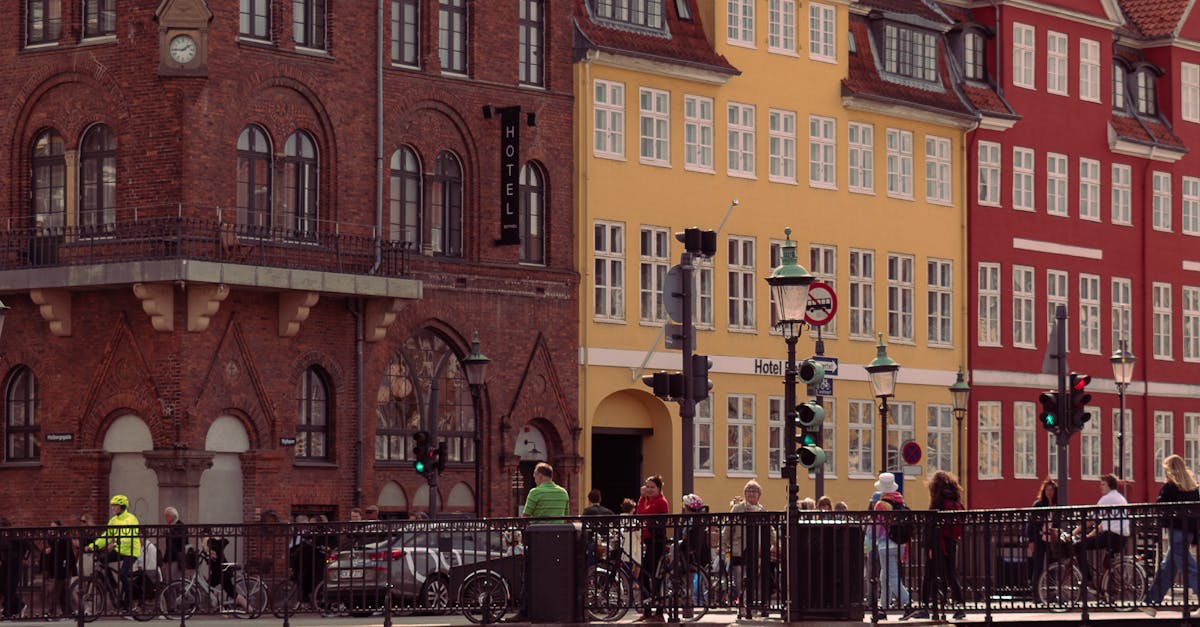
Denmark has become a global laboratory for turning corporate social responsibility (CSR) into commercially scalable circular economy strategies and sustainable design practices. Public ambition, consumer awareness, and collaborative institutions combine with innovative companies and startups to create examples that are widely cited and often replicated. The Danish approach blends product redesign, new business models, infrastructure investment, and supportive policy to reduce waste, keep materials in use, and lower carbon emissions while maintaining competitiveness.
Corporate leaders translating CSR into circular business models
LEGO — The LEGO Group connects its CSR strategy with product innovation and shifts across its supply chain, aligning a public pledge to replace core product and packaging materials with sustainable alternatives by 2030 alongside investments in renewable energy and the development of in-house capabilities for testing bio-based and recycled polymers, illustrating how R&D efforts, active supplier collaboration, and defined milestones can guide a long-standing manufacturer toward adopting circular materials.
Carlsberg — Carlsberg’s sustainability program links brewery-level improvements with packaging innovation. Two notable innovations are the replacement of shrink-wrap multipacks with adhesive-based solutions and the development of the Green Fibre Bottle prototype. Those efforts reduce single-use plastics and test renewable, paper-based alternatives, showing how beverage manufacturers can redesign packaging to reduce plastic and enable new recycling streams.
Maersk — As the world’s largest container shipping company based in Denmark, Maersk weaves CSR and circular thinking in fleet design into its fuel strategy and logistics operations. Its publicly stated goal of achieving net‑zero emissions across all activities by 2040 is supported through investment in vessels engineered for carbon‑neutral fuels like green methanol, alongside ongoing tests with sustainable biofuels and advanced optimization solutions that cut fuel use and overall lifecycle emissions.
Ørsted — The energy company’s shift away from fossil fuels toward offshore wind has turned it into a prominent illustration of corporate renewal committed to a low‑carbon, circular energy framework. Ørsted dedicates resources to durable, scalable infrastructure and supports component circularity by advancing refurbishment, repowering initiatives, and extended service approaches for its turbines and foundations.
Vestas — Vestas, a leading wind‑turbine producer, advances circular product design by enhancing component longevity, creating blade‑recycling methods, and providing service and maintenance agreements that prolong asset lifespans, cutting reliance on virgin materials and boosting resource efficiency throughout the wind industry value chain.
Grundfos — The pump manufacturer employs product-as-a-service approaches, remanufacturing initiatives, and spare-part take-back schemes to extend product lifespans. Through maintenance agreements and refurbished units, Grundfos reduces material use and demonstrates circular industrial practices in capital equipment.
Startups and social enterprises turning CSR into consumer-facing circular solutions
Too Good To Go — Established in Copenhagen, this platform links retailers with consumers to offer excess food at lower prices instead of letting it go to waste. The model illustrates how digital pairing tools and subtle behavioural cues can expand food-waste reduction efforts throughout urban retail networks.
WeFood and related social supermarkets — Initiatives that retrieve surplus or near-expiry food and sell it at low cost combine social impact with material efficiency. They reduce food waste, widen access to affordable food, and show how redistribution can be integrated into corporate and municipal waste strategies.
Design-driven startups — A varied Danish design ecosystem nurtures circular consumer goods that emphasize easy repair, modular construction, and the use of recycled materials. These firms frequently work with design schools and municipal pilot programs to test emerging materials and develop take-back systems.
Sustainable design and built-environment pilots
Amager Bakke / CopenHill — The Copenhagen waste-to-energy plant, conceived to merge public recreation with efficient energy recovery, exemplifies integrated sustainable design. It brings together urban leisure features, sophisticated emissions management and an emphasis on reclaiming value from non-recyclable waste streams, demonstrating a practical connection between circular resource strategies and contemporary urban design.
Copenhagen’s climate and circular ambitions — Municipal goals, highlighted by the city’s widely recognized pursuit of carbon neutrality, have encouraged circular procurement, initiated construction pilots focused on material repurposing, and launched citywide efforts to reduce waste. Public procurement is leveraged to stimulate markets for circular products and services.
Danish Design Centre and design policy — Institutions encourage circular design approaches—such as designing for disassembly, using material passports, and extending product lifespan—so that circularity can be integrated from the earliest development stages. Training resources and practical guides support the shift from broad CSR intentions to concrete, applicable design actions.